Imagine opening a small box and finding a tiny version of yourself inside. The same pose. The same jacket. The same smile. It fits in your hand, and it feels less like a souvenir and more like a memory you can hold.
That is what a 3D printed miniature statue is. It is a small, solid figure of a real person, created from photographs or a 3D scan. Instead of printing a memory on flat paper, modern additive manufacturing technology rebuilds it as a tangible, physical object.
These personalized 3D figurines have surged in popularity for a simple reason: smartphone cameras have improved dramatically, 3D photogrammetry software has become remarkably sophisticated, and high-precision 3D printers can now capture fine details like the weave of hair or the subtle folds in a shirt. A keepsake that was once a rare luxury is now something anyone can easily order.
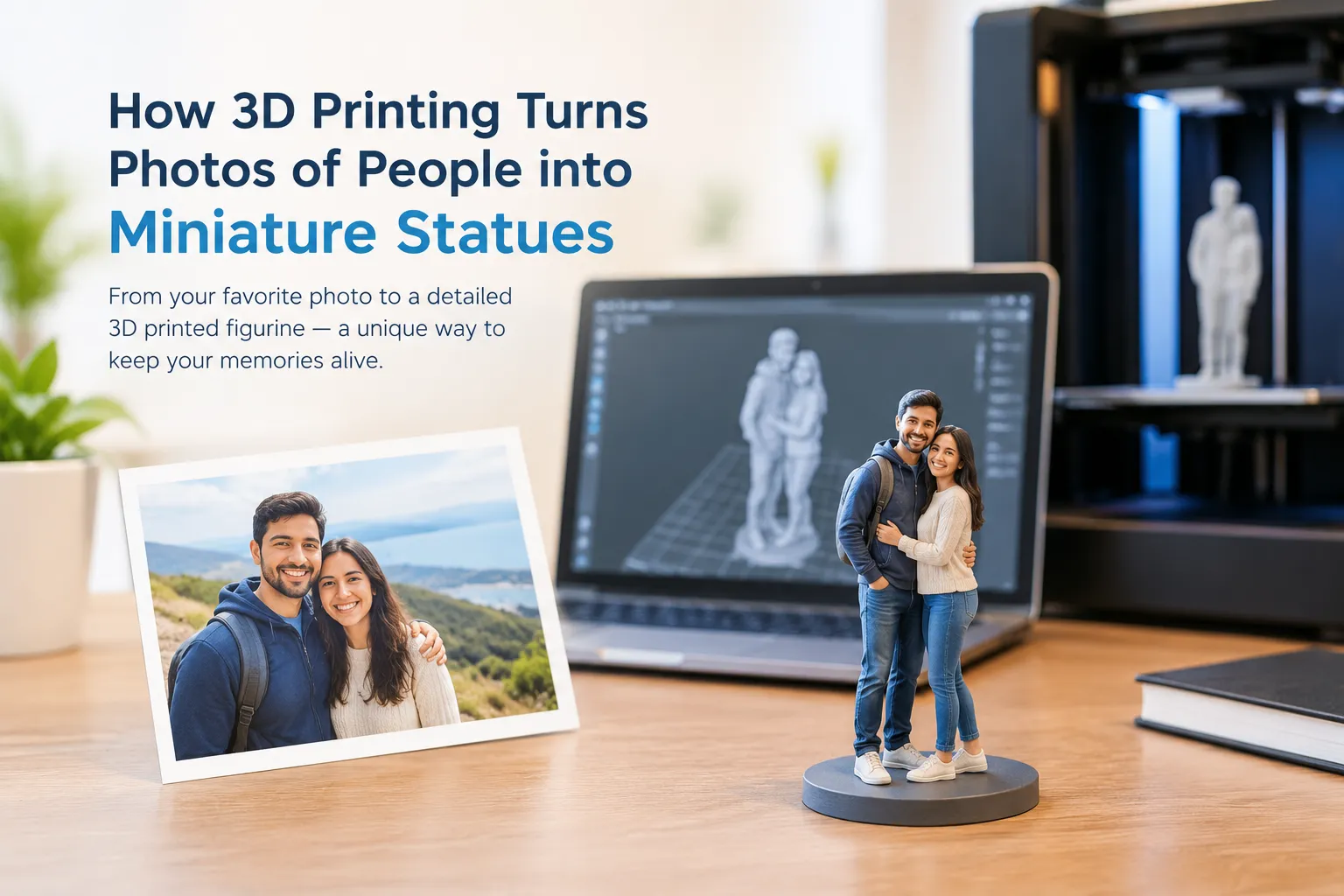
What Is 3D Figurine Printing?
The core concept is straightforward: a real person is captured as digital spatial data, that data is processed into a precise 3D digital model, and a 3D printer constructs the physical figure layer by thin layer.
People call these custom figures by many names:
- 3D selfies
- 3D portraits
- Mini-me figurines
- Personalized 3D miniature statues
They all describe the same craft.
The difference between a physical 3D figurine and a standard photograph is immediately obvious. A photo is flat; it shows a single angle from a single moment in time. A 3D printed figure has volume and presence. You can turn it in your hands, view it from behind, and feel its weight. It occupies space in a room like a fine sculpture.
How Does a Photo Become a 3D Printed Statue?
Converting flat photos into a physical 3D statue follows a precise six-stage workflow:
1. Capturing the Subject
There are two primary methods to gather visual data. With photogrammetry, multiple overlapping photos are captured from various angles around the subject, and software analyzes shared landmark points to reconstruct a 3D shape. With 3D scanning, specialized light or laser scanners record geometry directly. Scanning provides high precision, but photogrammetry allows you to create statues directly from existing photos.
2. Building and Sculpting the 3D Model
Raw camera data is never ready for direct printing. It comes in with rough geometry, surface noise, and missing holes. Skilled 3D digital artists refine the digital sculpture — filling gaps where the camera couldn't see, smoothing surfaces, and carefully reconstructing complex features like hair strands, glasses, and subtle facial expressions.
3. Preparing the Model for Physical Printing
Before sending the file to the printer, the 3D model undergoes technical preparation. Thin structures (such as fingers or glasses frames) are fortified, hollow sections are verified, a solid display base is integrated, and temporary support structures are added so overhanging arms or coats print cleanly without sagging.
4. Selecting the Printing Material
The choice of material determines facial detail sharpness, structural durability, heat tolerance, and whether color is applied during printing or hand-painted afterward.
5. Printing
The 3D printer builds the figurine layer by thin layer. A small 10 cm figure might take several hours, while larger, highly detailed couple statues or family groups require longer print times.
6. Finishing and Hand-Painting
A fresh print directly off the machine is not complete. Support structures are carefully removed, surfaces are sanded and washed, and the statue is primed. Skilled artisans then hand-paint fine details — skin tones, eyes, clothing patterns — before applying a protective sealed coat.
Can You Make a Statue From Just One Photo?
Yes, but understanding the technical limitations helps set realistic expectations.
Modern AI-assisted 3D modeling software can extrapolate a 3D mesh from a single photograph by predicting depth, contours, and unseen features. For stylized figures or historical keepsakes where only one photo exists, this method yields surprisingly good results.
However, a single photo contains no dimensional data about the back of the head, the sides of the face, or hidden areas behind arms or jackets. Software must estimate those unseen details. While these are intelligent guesses, the likeness is sharpest from the original camera angle and may feel slightly generalized as you rotate the figure.
The solution is simple: providing additional photos replaces software guesses with actual visual facts.
- 1 Photo: Creates an approximate, stylized figure.
- 3 to 5 Photos: Delivers a significantly stronger facial likeness and accurate hair/clothing details.
- Dozens of multi-angle photos or 3D scans: Yields the highest possible likeness and anatomical fidelity.
If likeness is your top priority, gathering a few extra photos from different angles is the single most helpful step you can take.
Choosing the Right Material for Your Figurine
Different materials serve different artistic and practical goals:
| Material | Key Features | Best For |
|---|---|---|
| High-Detail Resin | Light-cured resin delivering ultra-smooth surfaces and crisp facial features. Typically printed mono-color and hand-painted. | Realistic facial portraits and premium detailed miniatures. |
| Full-Color Powder | Gypsum-like composite material where color pigments are printed directly into the structure. | Full-color figures without needing manual hand-painting. |
| PLA Plastic | Affordable melted filament plastic. Durable and sturdy with faint layer line textures. | Larger figures, budget-conscious prototypes, and simpler styles. |
| Nylon (SLS) | Flexible, tough laser-sintered polymer that resists impact and wear. | Figures that will be handled frequently or traveled with. |
A simple decision rule:
- Choose Resin for maximum facial crispness and artistic hand-painting.
- Choose Full-Color Powder for vibrant, pre-colored printed outfits.
- Choose PLA for affordable larger displays.
- Choose Nylon for rugged durability.
What Factors Determine the Price?
Because every custom statue starts as a bespoke digital sculpture, pricing varies based on project specifications. Key factors influencing cost include:
- Size (Height): Scaling up height dramatically increases 3D volume (a 20 cm figure has roughly 8x the volume of a 10 cm figure), requiring more material and longer print cycles.
- Material & Printer Class: Fine-detail photopolymer resin and full-color powder equipment require higher material inputs than basic filament printers.
- Sculpting Complexity: Flowing dresses, detailed jewelry, pets, complex hair, or open poses require more digital sculpting and finishing labor.
- Number of People: Double figures (couples, parent-and-child, group statues) involve multiple subject captures, digital mesh assembly, and detailed painting.
- Hand-Painting & Detailing: Custom artisan painting adds significant visual craftsmanship and time.
- Duplicate Copies: Once a custom 3D model is created and approved, printing additional copies is far cheaper than the first build because digital sculpting is already complete.
Creative Uses for 3D Printed Figurines
Custom 3D miniature statues make unforgettable physical keepsakes across many life moments:
- Unforgettable Personalized Gifts: Surprise loved ones with a one-of-a-kind statue they never expected.
- Wedding & Anniversary Cake Toppers: Celebrate your special day with custom miniature statues of the bride and groom in full wedding attire.
- Family Milestones: Capture children at specific ages year after year, building a physical growth timeline on your mantle.
- Graduations, Birthdays & Retirements: Commemorate key career and personal achievements with figures wearing graduation gowns, uniform attire, or favorite outfits.
- Couple Keepsakes: Combine separate photos of partners or capture a shared embrace in 3D.
- Pet Memorials & Portraits: Eternalize beloved dogs, cats, or pets as detailed desktop figures.
- Corporate Awards & Mascots: Create custom company mascots, executive gifts, and employee milestone trophies.
- Collectibles & Character Sculptures: Bring original characters, gaming avatars, or tabletop figures to life.
3D Figurine Printing in Japan
Japan has a rich legacy of precision engineering, figurine craftsmanship, and miniature art. Modern 3D figurine printing fits naturally into Japan's deep culture of collecting, display craftsmanship, and commemorative portraiture.
The concept of high-resolution 3D photo studios gained global attention in Tokyo as early as late 2012, when agency pop-ups like *Omote 3D Shashin Kan* in Harajuku introduced scanned full-color personal figurines. Founders connected this modern technology to traditional Japanese customs like *Shichi-Go-San* (七五三) — the tradition of creating formal portrait memories of children at milestone ages.
Whether you live in Japan, are traveling in Tokyo or Osaka, or want to order a custom gift from abroad, working with a reliable printing partner ensures your photos translate into a beautiful physical sculpture.
How to Prepare Your Photos for a 3D Figurine Order
To ensure the best possible result when ordering your custom figurine, follow these quick photo preparation tips:
- 1Provide Clear, Even Lighting: Shoot photos in bright, natural light without harsh facial shadows or heavy filters.
- 2Include Multiple Angles: Send a clear front view, profile side views, and a back view if possible.
- 3Maintain Pose and Clothing Consistency: Wear the same outfit across all photos if submitting multiple reference shots.
- 4Choose a Practical Pose: Poses with arms held closer to the torso or resting on hips print more securely and durably than wide, outstretched arms.
- 5Select Your Desired Size: Standard miniature sizes (10 cm to 20 cm) look great on desks and display shelves.
- 6Review the Digital 3D Preview Before Printing: Always request a digital preview approval. Adjusting digital 3D meshes before printing is simple and ensures complete satisfaction with the likeness.
Order Custom 3D Printed Statues with Print Japan
Ready to transform your favorite photo into a detailed physical miniature statue? Print Japan makes the entire process seamless, reliable, and 100% English-friendly.
When you order with Print Japan, you benefit from:
- Full English Support: Clear communication from photo review through to final delivery anywhere in Tokyo, Osaka, and nationwide in Japan.
- Expert Photo & File Review: Send us your photos, and our team will evaluate likeness viability, recommend the best printing materials (high-detail resin, full-color powder, or PLA), and assist with 3D file preparation.
- Precision Printing & Professional Finishing: High-resolution 3D output with optional hand-painting and durable surface coating.
- Convenient Ordering: Fast online quotes and direct communication via WhatsApp for easy photo submission and digital 3D proofing.
How to Place Your Order
- 1Gather Your Photos: Select your favorite photos (front, side, back views) or discuss your ideas with our team.
- 2Request a Free Quote: Visit Print Japan Quote Request or send us a message on WhatsApp with your images and size requirements.
- 3Approve Your 3D Proof: Review the digital 3D sculpture proof to confirm likeness before printing begins.
- 4Receive Your Statue: Your custom 3D printed figurine is carefully printed, finished, packaged, and delivered directly to your doorstep in Japan or shipped internationally.
*Turn your favorite photo into a memory you can hold. Request a Quote or contact Print Japan on WhatsApp today to start your custom 3D printed statue project!
Need to print in Japan?
Get an instant quote or message us on WhatsApp. Everything handled in English.