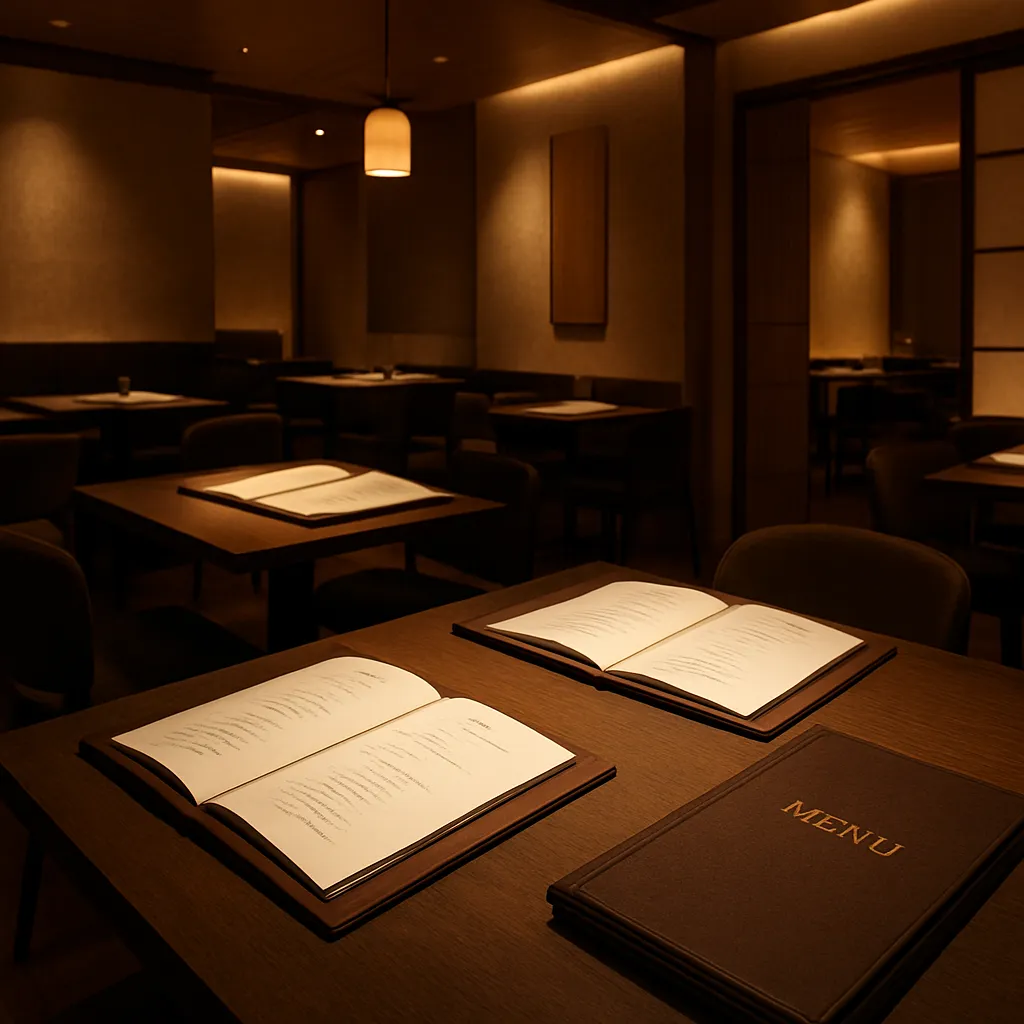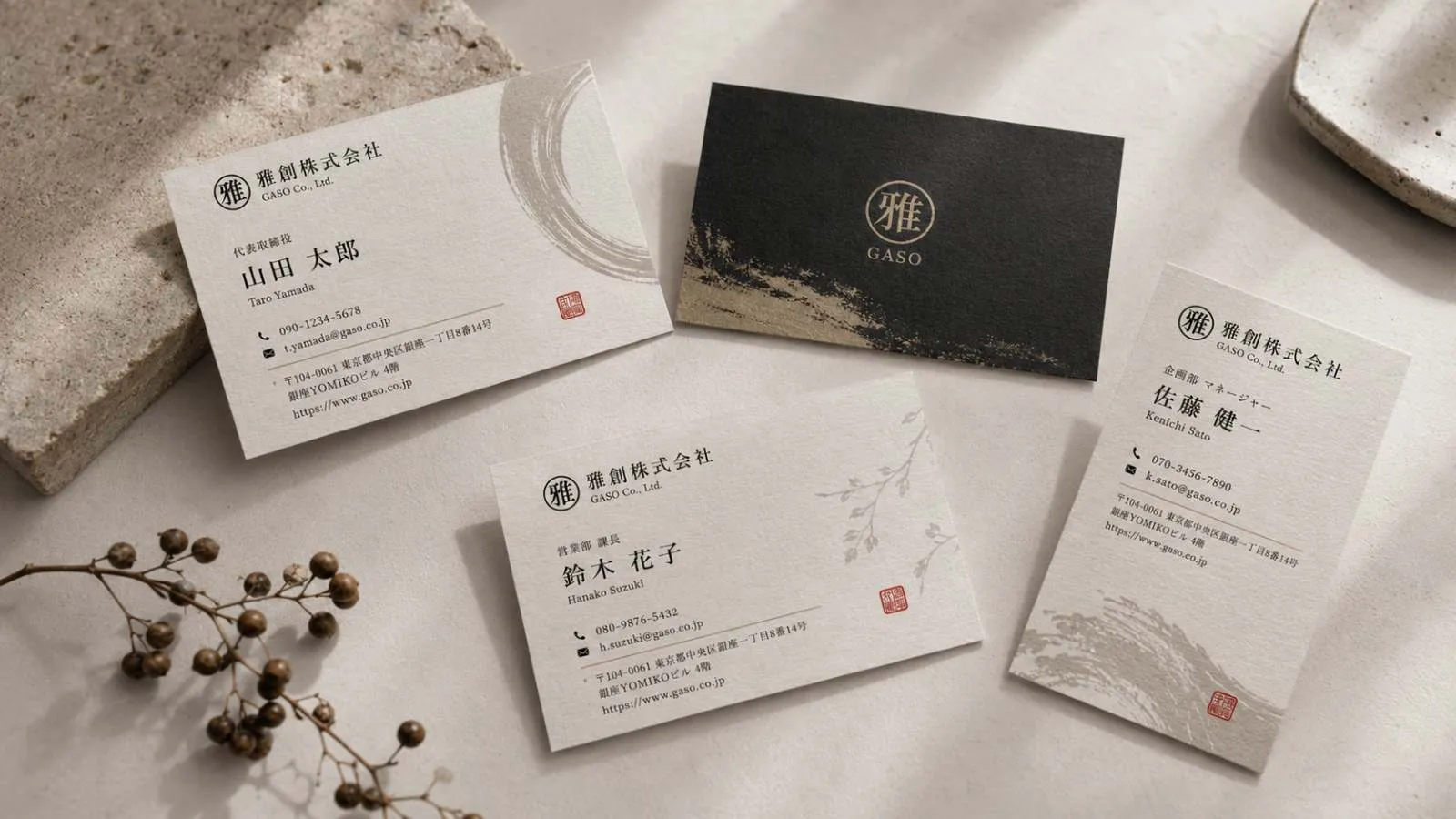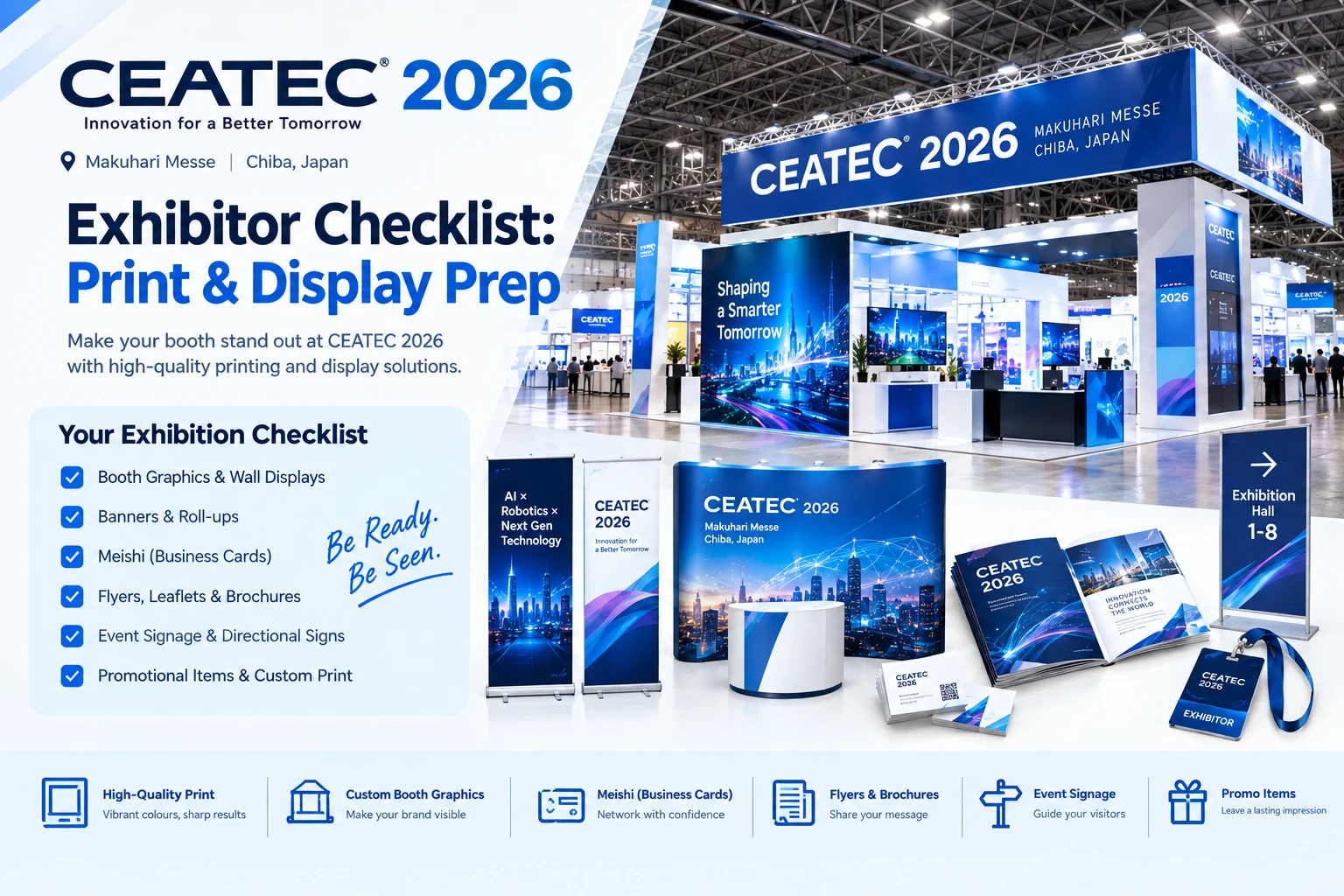
Setting up an entity, establishing a regional office, launching a product, or running a B2B sales campaign in Japan means dealing with printed collateral sooner or later. Whether you need bilingual business cards (meishi) for a newly hired sales team, multi-page bound booklets for a product launch, high-volume marketing leaflets for trade shows, or menu books for a flagship venue, physical materials remain indispensable to doing business in Japan.
Despite rapid digital adoption across Asia, Japanese business culture continues to place immense value on physical presentation. Handing over a poorly printed document, an awkward machine-translated flyer, or a business card trimmed to non-standard Western dimensions can subtly signal a lack of commitment to the local market.
For foreign enterprises, global marketing teams, and overseas trade show exhibitors, navigating Japanese commercial printing can be daunting. Domestic print platforms in Japan operate strictly in Japanese, assume deep familiarity with local ream weight conventions (*Shiroku-ban* 四六判), reject non-Japanese fonts during automated pre-press checks, and offer zero English customer support when an urgent issue arises.
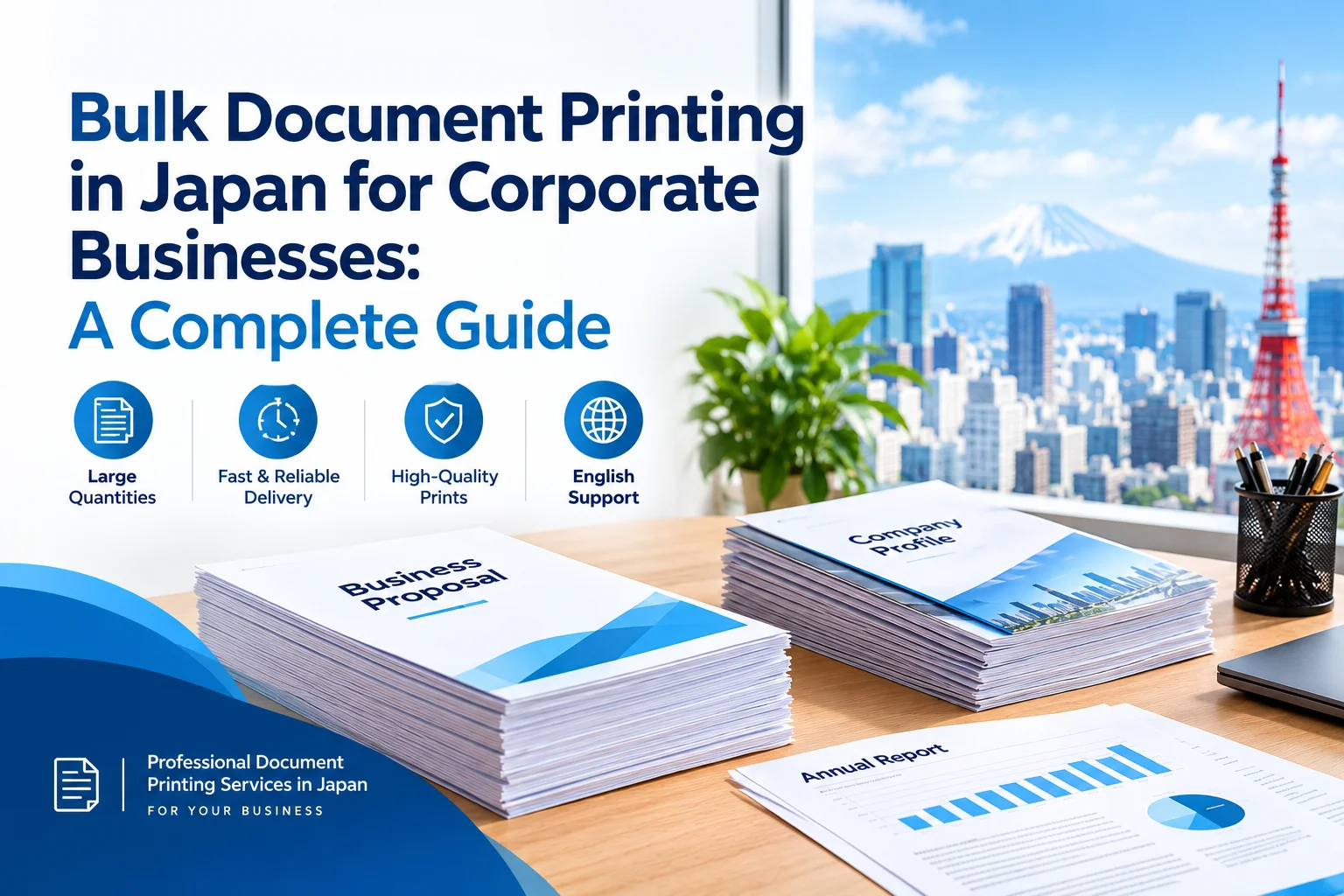
This exhaustive guide covers everything corporate buyers, procurement managers, and marketing directors need to know about bulk document printing in Japan—including technical specifications, paper conversions, bilingual typesetting, cost drivers, venue delivery, and how to get it done in 100% English without unexpected surprises.
---
1. Why Bulk Printing Remains Central to Japanese Corporate Culture
While Western corporate workflows rely heavily on digital pitch decks and QR code links, physical print materials in Japan carry cultural weight and operational necessity. Understanding why physical print is so heavily embedded in Japanese commerce helps international teams plan their collateral budgets effectively.
1. The Ritual of Formal First Meetings (*Meishi Koukan*)
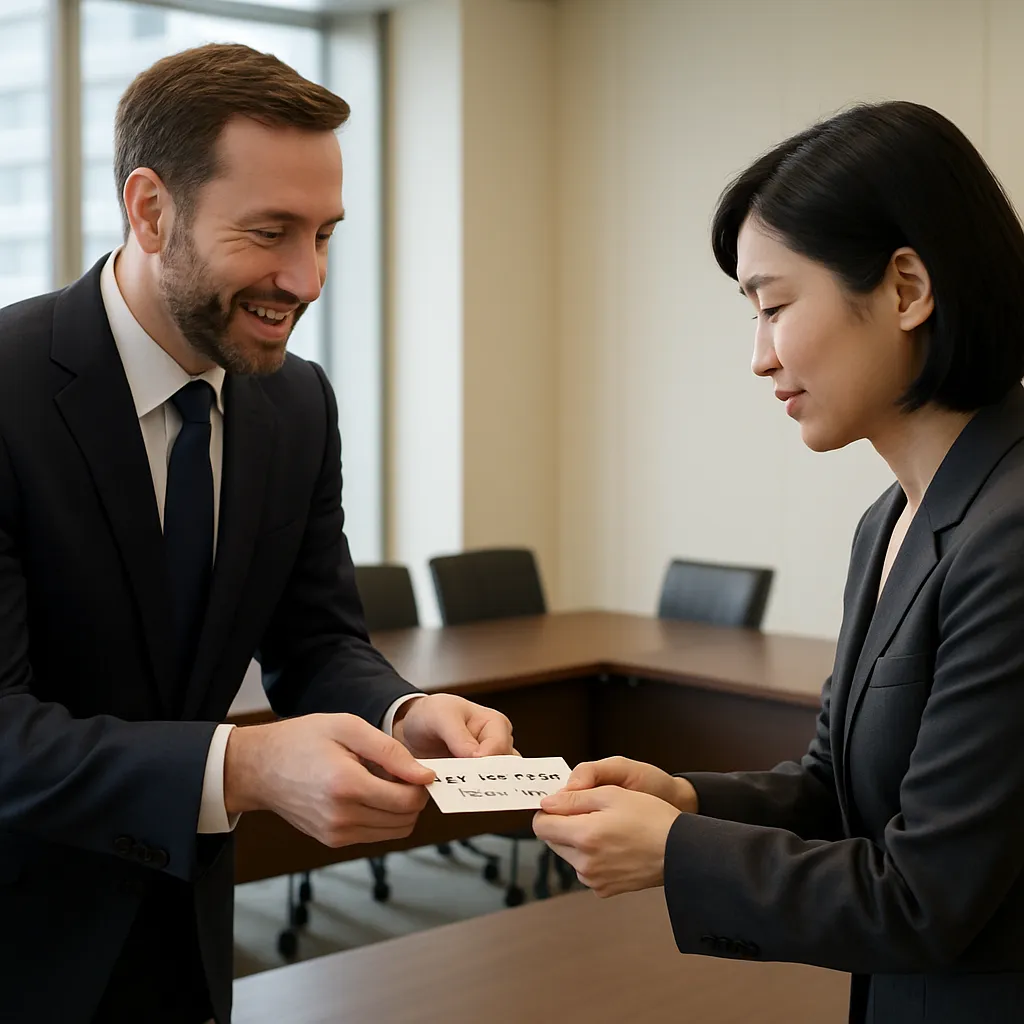
In Japan, exchanging business cards (*Meishi Koukan* 名刺交換) is not a casual contact swap—it is a formal sign of respect that initiates every professional relationship. Japanese executives hold, inspect, and arrange received cards in order of seniority during meetings. Presenting a card with crisp paper weight, flawless bilingual formatting, and standard Japanese dimensions (91 × 55 mm) establishes immediate corporate credibility.
2. High Expectation for Physical Sales Leave-Behinds
Japanese corporate buyers and procurement committees expect detailed physical documentation during sales presentations. High-quality A4 technical datasheets, multi-page saddle-stitched booklets, and tri-fold pamphlets are archived in corporate project binders and reviewed by senior decision-makers long after a meeting ends.
3. Exhibition & Trade Show Dynamics
Major trade shows held at convention centers like Tokyo Big Sight, Makuhari Messe, Pacifico Yokohama, and INTEX Osaka attract hundreds of thousands of corporate attendees. Visitors actively collect printed company profiles, product catalogs, and collectible postcards. Stand banners, including roll-up banner stands and foam board display panels, define your booth footprint amidst fierce competition.
4. In-House Printing vs. Commercial Bulk Printing Cost Analysis
Many foreign companies operating in Tokyo or Osaka initially attempt to print corporate sales decks, training manuals, and flyers on leased office multifunction laser printers. However, in-house office printing carries hidden costs:
- High per-page toner costs (typically ¥15 to ¥30 per full-color page)
- Inconsistent color calibration and banding on solid blocks
- Flimsy 64gsm–70gsm copier paper that lacks professional tactile weight
- Time-consuming manual folding, stapling, and edge trimming
By outsourcing to a professional commercial printer like [Print Japan](https://www.print-japan.com), corporate teams lower unit costs significantly through volume offset or high-speed digital presses, while receiving heavy coated stocks, precise machine folding, perfect binding, and protective lamination.
---
2. Complete Corporate Bulk Print Product Suite
When planning a bulk print run for a Japanese enterprise campaign, selecting the appropriate substrate, size, and finish ensures your brand messaging aligns with local expectations.
| Product Category | Standard Dimensions | Recommended Stock Weight | Typical Corporate Applications | Production Lead Time |
|---|---|---|---|---|
| :--- | :--- | :--- | :--- | :--- |
| [Bilingual Business Cards](/products/business-cards) | Japanese Meishi (91 × 55 mm) | 220kg – 260kg (256 – 300 gsm) Silk / Matte | Executive team cards, sales onboarding, trade show networking | 1–2 business days |
| [Flyers & Datasheets](/products/leaflets) | ISO A4 (210 × 297 mm) / A5 | 90kg – 110kg (104 – 128 gsm) Gloss / Silk | Sales leave-behinds, product sheets, event handouts | 2–3 business days |
| [Tri-Fold Leaflets](/products/trifold-leaflets) | A4 folded to DL (99 × 210 mm) | 110kg – 135kg (128 – 157 gsm) Matt Coated | Corporate overview, product features, service summaries | 2–3 business days |
| [Bound Booklets](/products/booklets) | ISO A4 / B5 (8 to 64+ pages) | 90kg interior / 135kg cover (Saddle-stitched) | Company profiles, annual reports, product catalogs | 3–5 business days |
| [Postcards & Direct Mail](/products/postcards) | ISO A6 / Standard (100 × 148 mm) | 180kg – 220kg (210 – 256 gsm) Premium Cardstock | Direct mail marketing, event VIP invites, promo vouchers | 2–3 business days |
| [Display Posters](/products/posters) | ISO A0, A1, A2 / JIS B1, B2 | 180gsm Photo Gloss / Synthetic YUPO | Office lobby graphics, retail displays, seminar backdrops | 1–2 business days |
| [Foam Board Panels](/products/foam-board-panels) | Custom / A1, A2, A0 (7mm Rigid) | 7mm Lightweight Flame-Retardant Board | Exhibition booth walls, easel displays, counter signs | 2–3 business days |
| [Roll-Up Banners](/products/roll-up-banners) | 850 × 2000 mm / 1200 × 2000 mm | Anti-Curl Satin PET Film in Aluminum Base | Trade show booths, corporate seminars, showroom entrances | 2–3 business days |
| [X / I / T Banner Stands](/products/x-banner-stands) | 600 × 1600 mm / 800 × 1800 mm | Vibrant Matte Vinyl Film with Grommets | Flexible event displays, directional signage, product launches | 2–3 business days |
| [Promo Flags (Nobori)](/products/promo-flags) | Japanese Standard (600 × 1800 mm) | 110gsm Knitted Polyester with Swivel Pole | Storefront advertising, outdoor corporate events, venue entry | 3–4 business days |
| [Restaurant Menu Books](/products/restaurant-menus) | ISO A4 / B5 / Custom Slim | 200gsm Synthetic YUPO / 250u PET Lamination | Hospitality venues, hotel dining, wipe-clean catalogs | 3–4 business days |
---
3. Technical Paper Standards & Pre-Press Rules in Japan
One of the primary causes of print delays, corrupted layouts, and unexpected reprints when ordering print in Japan from abroad is misunderstanding Japanese pre-press specifications.
1. JIS B-Series vs. ISO A-Series Paper Sizes
While ISO A-series (A4, A3, A5) is used universally across Europe and North America, Japan utilizes two distinct paper size standards:
- ISO A-Series: Standard for corporate international communications (e.g. A4 = 210 × 297 mm).
- JIS B-Series (Japanese Industrial Standard): JIS B-series sizes are significantly larger than ISO B-series sizes used in Western countries. For example, JIS B5 measures 182 × 257 mm (commonly used for Japanese corporate workbooks, pamphlets, and government documentation).
*Important:* Never submit artwork formatted for US Letter (8.5″ × 11″ / 215.9 × 279.4 mm). Converting US Letter to Japanese ISO A4 without pre-press adjustment results in cropped margins or unwanted white side bars. Read our detailed technical guide on Japan Paper Sizes Explained: A4, B5, and File Formatting.
2. Japanese Paper Ream Weight (*Shiroku-ban* 四六判 kg) vs. GSM
Commercial print shops in North America and Europe express paper thickness in GSM (Grams per Square Meter) or pounds (lb). Commercial printers in Japan specify paper weight in kilograms (kg), representing the weight of 1,000 sheets cut to the traditional *Shiroku-ban* (四六判 788 × 1091 mm) uncut ream standard.
Use this conversion table when planning your corporate collateral:
| Japanese Weight (*Shiroku-ban* 四六判) | Equivalent GSM | Common Commercial Application |
|---|---|---|
| :--- | :--- | :--- |
| 55 kg | ~64 gsm | Thin NCR carbonless invoice forms |
| 70 kg – 73 kg | ~81 gsm | Standard office copier paper, internal memos |
| 90 kg | ~104 gsm | Standard marketing flyers, catalog interior pages |
| 110 kg | ~128 gsm | Premium corporate datasheets, heavy sales handouts |
| 135 kg | ~157 gsm | Brochure covers, tri-fold pamphlets, heavy leaflets |
| 180 kg | ~210 gsm | Light display cards, postcard mailers, presentation covers |
| 220 kg | ~256 gsm | Standard Japanese business cards (*meishi*), luxury cards |
| 260 kg | ~300 gsm | Premium heavy executive business cards, rigid display covers |
3. Pre-Press File Specifications Checklist
To guarantee crisp, error-free printing on Japanese commercial presses, ensure your design files adhere to these prepress rules:
- File Format: High-resolution PDF/X-1a or PDF/X-4. Vector files (.AI or .EPS) are also accepted.
- Color Profile: Convert all RGB elements to CMYK (Japan Color 2001 Coated profile preferred) to avoid color shifting during press runs.
- **Bleed Allowance (*Tachiotoshi* 立ち落とし): Add 3 mm bleed on all four edges. Keep essential text and logos at least 3 mm inside** the final trim boundary.
- Resolution: Minimum 300 DPI at 100% scale for offset/digital print; 150 DPI at 100% scale for large-format banners.
- Font Outlining: Outline all vector fonts (Create Outlines / Convert to Curves) to prevent missing font substitutions on Japanese RIP processors.
---
4. The Language Barrier: Navigating Japanese Print Shops
For foreign companies operating in Japan, the most frustrating part of corporate printing is rarely the printing itself—it is the communication wall.
Why Domestic Japanese Print Platforms (Raksul, Print-G, Printkk) Fail Non-Japanese Teams
Domestic Japanese Web-to-Print services like Raksul (ラクスル) offer attractive base pricing for simple domestic jobs. However, foreign corporate teams frequently encounter major hurdles:
- 1100% Japanese Interfaces: Web portals, order tracking, and pre-press error logs operate exclusively in Japanese Kanji.
- 2Automated File Checker Rejections: Automated pre-press algorithms automatically reject PDFs containing embedded non-Japanese fonts or non-JIS canvas dimensions, returning cryptic Japanese error codes without human explanation.
- 3Payment & Billing Locks: Domestic platforms often require Japanese domestic credit cards, local furigana billing names, or domestic bank transfers (*Furikomi*), blocking overseas corporate credit cards.
- 4Zero Event Venue Logistics: Domestic sites ship strictly via standard courier to domestic street addresses and will not coordinate direct booth delivery to exhibition halls like Tokyo Big Sight or Makuhari Messe.
- 5No Bilingual Design Support: If a layout breaks during text translation, automated platforms print the file as submitted—resulting in awkward hyphenation and overlapping text.
Read our complete breakdown in How to Use Raksul in English & Native Alternatives for Foreigners.
The Print Japan Advantage: Native English Pre-Press & Design
At Print Japan, we bridge the gap between global corporate brand standards and Japanese commercial printing. Every order includes:
- 100% Native English Communication: Instant consultation via email or WhatsApp (+81 80-9062-3586).
- Bilingual Typesetting & Proofing: Our native Japanese designers review your Japanese copy, line breaks, and furigana phonetics to guarantee cultural appropriateness.
- Pre-Press Artwork Correction: Free pre-flight file checks. If your file lacks 3mm bleed or uses RGB, our pre-press team corrects it free of charge.
- Corporate Account Invoicing: Seamless online payment via Stripe (Visa, Amex, MasterCard), Wise, or international wire transfer with itemized JPY invoices.
---
5. Direct Delivery Across Japan: Offices, Hotels & Trade Shows
Whether your organization requires bulk documents delivered to a Tokyo headquarters, a temporary hotel workspace, or an exhibition booth in Osaka, logistics must be airtight.
1. Corporate Office & Regional Branch Delivery
We deliver nationwide across all 47 prefectures in Japan via Yamato Transport (Black Cat), Sagawa Express, or dedicated logistics freight. Standard office shipments include tracking numbers and estimated morning delivery slots (*Gozen-chū*).
2. Hotel Reception Desk Holding (*Takkyubin*) for Overseas Teams
If your executive team or sales representatives are flying into Tokyo, Osaka, Kyoto, or Nagoya for a business trip, carrying heavy boxes of catalogs across airports is inefficient. Print Japan ships print orders directly to your hotel front desk prior to check-in.
- Addressing Format: We address packages with your full passport check-in name, reservation reference number, and check-in date in both English and Japanese Kanji.
- Hotel Coordination: Japanese hotel front desks routinely accept courier packages and hold them securely until guests check in. Learn more in our Pre-Arrival Printing Guide for Overseas Travelers.
3. Direct Trade Show Booth Delivery
For corporate exhibitors at major Japanese trade venues, we deliver directly to your assigned hall and booth number during official setup days (*Hannyubi*):
- [Tokyo Big Sight](/events/tokyo-big-sight): East Halls 1–8, West Halls 1–4, South Halls 1–4.
- [Makuhari Messe](/events/makuhari-messe): Exhibition Halls 1–8, Halls 9–11, Event Hall.
- [Pacifico Yokohama](/events/pacifico-yokohama): Exhibition Halls A–D, North Hall.
- [INTEX Osaka](/events/intex-osaka): Building Halls 1, 2, 3, 4, 5, and 6 (A/B).
- [Nagoya Congress Center](/events/nagoya-congress-center) & [Kyoto ICC](/events/kyoto-icc).
---
6. Corporate Pricing, Volume Discounts & Tax Compliance
Commercial printing costs in Japan depend on quantity, paper weight, binding finish, and lead time. Ordering in larger bulk volumes significantly reduces the cost per unit.
Cost Driver Summary
- 1Quantity: Offset printing has higher setup costs but dramatically lower unit prices on runs over 500–1,000 pieces. Digital printing is cost-effective for short runs under 300 pieces.
- 2Paper Finish & Weight: Upgrading from standard 90kg to heavy 135kg silk or adding Matte PP lamination adds a small premium but dramatically improves tactile quality.
- 3Special Finishes: Spot UV, foil stamping (gold/silver leaf), embossing, and rounded corner die-cutting.
- 4Turnaround Speed: Standard 3–5 day production offers maximum savings; 24–48 hour express rush carries a rush surcharge.
Corporate Discount Tiers
Print Japan provides transparent, itemized quotes in Japanese Yen (JPY). We offer volume discounts on consolidated orders, including an instant ¥5,000 discount on orders exceeding ¥100,000.
Japanese Qualified Invoice Compliance (*Tekikaku Seikyusho* 適格請求書)
Foreign companies operating registered corporate entities in Japan (*Kabushiki Kaisha* KK or *Goudo Kaisha* GK) require compliant invoices to deduct 10% Japanese Consumption Tax (JCT / *Shōhizei* 消費税). Print Japan issues official **Qualified Invoices (*Tekikaku Seikyusho*)** displaying our Japanese Tax Agency Registration Number (T-Number), ensuring full corporate accounting compliance.
---
7. Step-by-Step: How to Order Bulk Printing in Japan
Ordering bulk corporate print collateral with Print Japan is simple, fast, and completely managed in English:
> 1. Submit Specs ➔ 2. Free Pre-Press Check ➔ 3. Digital Proof Approval ➔ 4. Secure Online Payment ➔ 5. Local Production ➔ 6. Tracked Delivery
- 1Submit Project Specifications: Fill out our quick Online Quote Form or send your requirements (product, quantity, size, deadline, delivery address) via WhatsApp (+81 80-9062-3586).
- 2Free Technical File Check: Our pre-press team inspects your artwork files for resolution, CMYK color profiles, 3mm bleed, and font outlining free of charge.
- 3Review Digital Proof: We send a digital pre-press proof for your final written sign-off.
- 4Pay Securely: Complete payment online via credit card (Stripe), Wise, or Japanese bank transfer.
- 5Local Production: Your order is printed on high-precision commercial presses in Tokyo or Kansai.
- 6Tracked Delivery: Receive your packaged print collateral at your corporate office, hotel front desk, or trade show booth with full courier tracking.
---
8. Summary Checklist for Corporate Procurement Teams
Before approving your next commercial print run in Japan, review this final checklist:
- [ ] Dimensions Verified: Business cards set to 91 × 55 mm; documents set to ISO A4 or JIS B5.
- [ ] Bleed Included: 3 mm bleed added on all four sides (*Tachiotoshi*).
- [ ] Color Mode: File converted to CMYK (Japan Color 2001 Coated).
- [ ] Fonts Outlined: All vector typography converted to paths/outlines.
- [ ] Resolution Checked: All images verified at 300 DPI minimum at 100% scale.
- [ ] Bilingual Typography: Japanese text checked by native speakers for appropriate phrasing and natural line breaks.
- [ ] Delivery Address Confirmed: Complete address including building name, floor number, contact phone number, and delivery time window.
- [ ] Tax Invoice Requested: Confirm inclusion of Japanese Qualified Invoice registration number (*Tekikaku Seikyusho*).
---
Ready to Streamline Your Corporate Printing in Japan?
Bulk document printing in Japan does not have to be complicated, risky, or language-bound. Partner with Print Japan for native English service, flawless pre-press file checks, transparent JPY pricing, and reliable nationwide delivery.
- Request an Instant Corporate Quote: Print Japan Online Quote Form
- Chat Live in English on WhatsApp: WhatsApp (+81 80-9062-3586)
- Explore Business Card Solutions: Bilingual Business Cards Japan
- Explore Event Banners & Signage: Roll-Up Banners & Banners
Need to print in Japan?
Get an instant quote or message us on WhatsApp. Everything handled in English.