Opening a restaurant in Japan involves far more than sourcing ingredients and hiring staff. Between legal signage requirements, bilingual guest communication, and the small paper touches that define Japanese hospitality (omotenashi), your printed materials list will be longer than you expect. Below is a category-by-category checklist to help you plan your print budget and timeline before opening day.
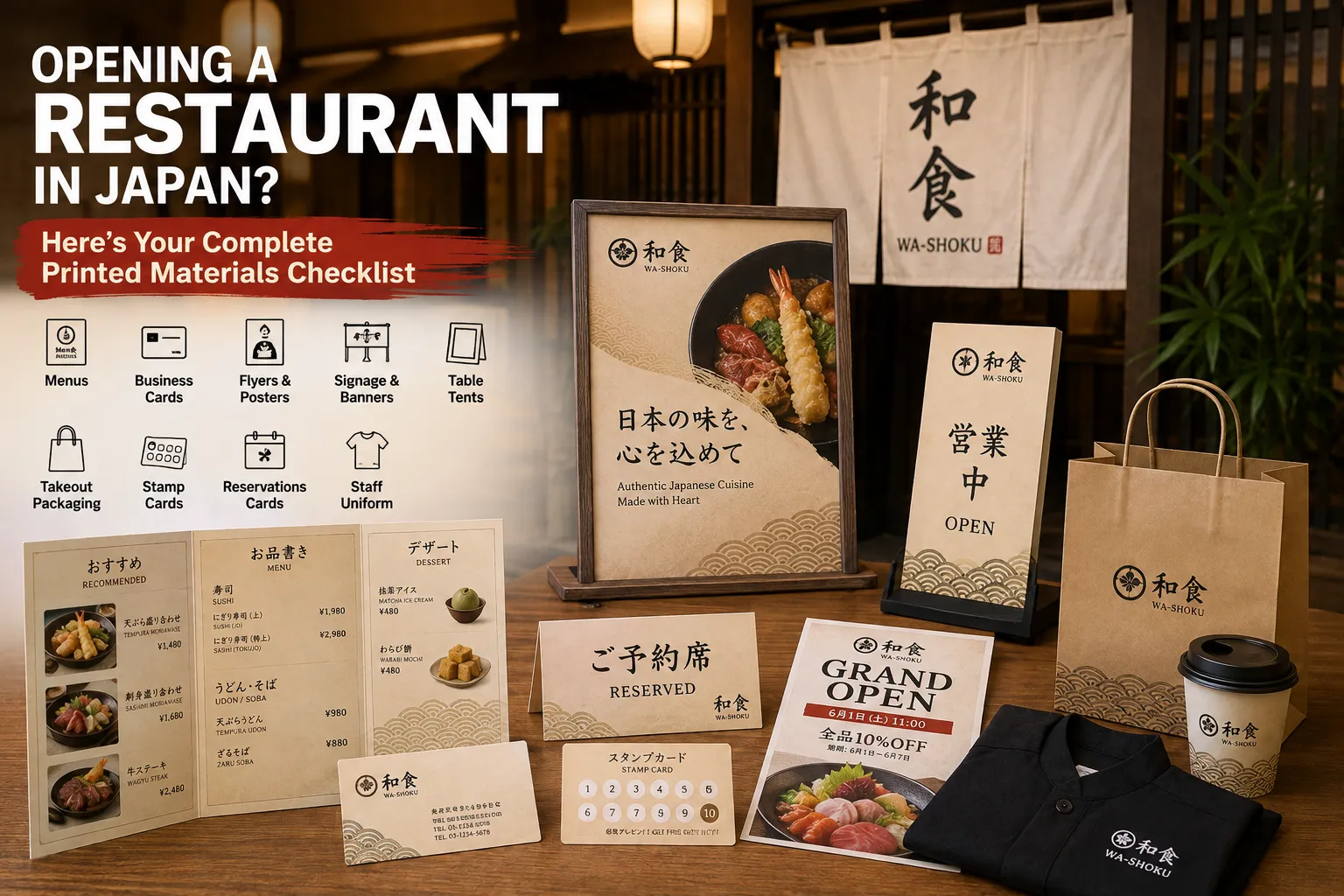
Restaurant Print Checklist: The 8 Categories at a Glance
Here is the complete list of printed materials you need when opening a restaurant in Japan:
- Menus — tax-inclusive, bilingual, with allergen and takeout pricing
- Exterior signage — main shop sign (kanban), hours, menu board, smoking policy
- Permits and notices — food business permit, hygiene manager notice
- In-restaurant materials — table tents, coasters, chopstick sleeves, order slips
- Takeout materials — takeout menus, packaging labels, coupons
- Front-of-house — receipts, invoices, name tags, staff branding
- Marketing — business cards, flyers, loyalty cards, gift certificates
- Opening day — grand opening banners, flower stand cards, press kits
1. Restaurant Menu Printing in Japan
Your menu is the single most important printed item in the restaurant, and in Japan it carries some specific requirements beyond good design.
- Tax-inclusive pricing (zeikomi hyōji). All displayed prices, including on menus, must show the final amount the customer pays, consumption tax included. Pre-tax pricing with a "+tax" note is not permitted.
- Dual tax-rate notice. Because Japan applies different consumption tax rates to eat-in (10%) and takeout (8%) food service, any menu covering both options needs a clear note explaining the difference so customers aren't surprised at the register.
- Bilingual or multilingual versions. English is close to essential in most tourist-facing areas, and Chinese or Korean versions are common in high-traffic locations. Budget for at least an English-Japanese menu, with photos where possible for visitors who don't read either language.
- Allergen and ingredient information. While not universally mandated for every restaurant, disclosing the major allergens (Japan's official list includes items like egg, milk, wheat, shrimp, crab, buckwheat, and peanuts) is strongly expected practice and increasingly requested by inbound customers.
- Vegetarian, vegan, and halal indicators. Simple icon-based labeling on the menu helps international guests self-select quickly.
- Course/omakase menus. Printed separately if you offer set courses, often as a folded card or single sheet distinct from the à la carte menu.
- Seasonal/limited-time menu inserts. Small removable or clipped-in pages let you rotate specials without reprinting the whole menu.
- QR-code menu cards. Even restaurants that rely on digital menus typically still print a small table card with the QR code, restaurant name, and Wi-Fi details.
Need help with the menu itself? See our guide on printing restaurant menus for foreign owners in Japan for sizing, translation, and paper stock advice.
2. Restaurant Exterior Signage and Kanban
- Main shop sign (kanban). Your primary storefront signage — required for basic visibility and often regulated by local ordinance (size, illumination, placement) depending on the ward or city.
- Business hours and closed-day sign. Standard practice is a printed or printed-and-laminated sign by the door showing hours and regular closing days (teikyūbi).
- Menu display case/board. Many Japanese restaurants post a printed menu or food samples with prices directly outside — this is often the deciding factor for walk-in customers.
- "Open/Closed" sign (eigyōchū/junbichū). A double-sided flip sign is standard.
- No smoking / smoking area signage. Required under Japan's revised Health Promotion Act; restaurants must clearly post their smoking policy (fully non-smoking, smoking room, etc.) at the entrance.
- Accessibility and stroller/wheelchair signage, if applicable.
- Reservation-required or walk-in-welcome signage.
For full guidance on storefront signs for foreign-owned businesses, read our retail signage in Japan guide.
3. Legally Required Restaurant Permits and Notices in Japan
Japanese food service businesses are required to display certain licenses where customers or inspectors can see them.
- Food business permit (eigyō kyoka-sho), issued by the local health center (hokenjo), typically displayed near the entrance or register.
- Named food hygiene manager notice (shokuhin eisei sekininsha) identifying the person responsible for food safety.
- Fire safety management notice, where applicable.
- Liquor license documentation, if you serve alcohol.
- Late-night business notification, if operating past standard hours and serving alcohol as a primary offering.
Requirements vary by municipality, so confirm exact posting rules with your local health center and fire department before printing final versions.
4. In-Restaurant Guest Materials (Table Cards, Coasters, Chopstick Sleeves)
- Table tents / table cards for specials, campaigns, or seasonal drinks.
- Coasters, often branded, and sometimes doubling as a small ad space.
- Chopstick sleeves (hashibukuro), a small but expected branding touch in many Japanese restaurants.
- Placemats, particularly in casual and family-style restaurants.
- Order slips / order sheets, especially for izakaya-style ordering where guests write or check off items.
- Condiment and seasoning labels.
- Reservation/waitlist cards or numbered tickets.
- Restroom signage, bilingual, plus any washlet/toilet-use instructions for international guests unfamiliar with Japanese toilets.
- Coat hooks / bag basket usage signs, a small courtesy touch common in Japanese dining.
5. Takeout and Delivery Materials (8% Reduced Tax Rate)
- Takeout menu, separately priced to reflect the 8% reduced tax rate.
- Packaging labels with ingredient, allergen, and best-by information.
- Bags and wrapping paper, branded if budget allows.
- Thank-you inserts or discount coupons for repeat takeout customers.
- Delivery platform signage, if you display Uber Eats, Demae-can, or Wolt decals at the entrance.
6. Front-of-House Operations (Receipts, Invoices, Name Tags)
- Receipts and invoices. Standard cash register receipts must reflect tax-inclusive totals; for business customers, you'll also need printed proper invoices (compliant with Japan's qualified invoice/Invoice System rules) if you're a taxable enterprise.
- Staff name tags or name plates.
- Staff uniforms with printed branding (aprons, happi coats, etc.), if part of your concept.
- Internal training manuals and SOP printouts for kitchen and floor staff.
- Shift schedules and internal notices posted in staff areas.
7. Marketing and Branding Materials for Restaurants (Business Cards, Flyers, Loyalty Cards)
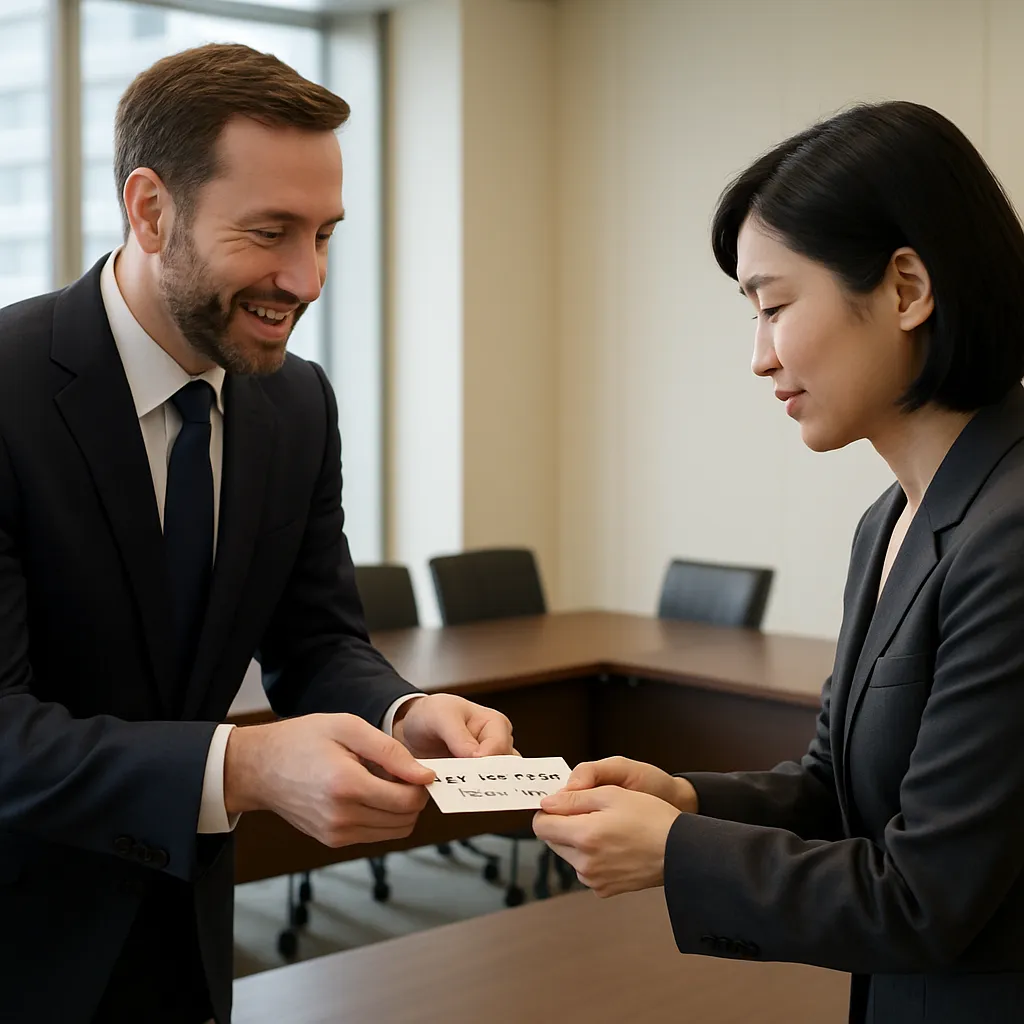
- Business cards (meishi) for the owner, manager, and any staff meeting suppliers or press — an important part of Japanese business etiquette.
- Flyers (chirashi) for local distribution or mailbox drops ahead of opening.
- Opening announcement postcards (DM) for loyal customers or neighborhood businesses.
- Loyalty/stamp cards, still widely used in Japanese restaurants alongside digital point systems.
- Gift certificates / shokujiken (meal tickets), common for corporate and gift-giving culture.
- Social media and review-site prompt cards (subtle table cards encouraging Google or Tabelog reviews).
8. Restaurant Opening Day Essentials (Grand Opening Banners)
- Grand opening banners and pop-up signage.
- Congratulatory flower stand cards, if following the Japanese custom of displaying flower stands (sending and receiving is common for business openings).
- Press kit materials, if you're inviting local media or influencers.
Restaurant Print Timeline: When to Order Everything
A rough rule of thumb: legal signage and permits should be finalized first since they depend on inspections and approvals, followed by menus (which need translation and possibly multiple review rounds), and finally the smaller in-restaurant items like coasters and chopstick sleeves, which can be adjusted right up until opening. Building in a buffer of two to three weeks for translation review and proofing — especially for multilingual menus — will save you from costly reprints after you've already opened your doors.
| Item | Order ahead | Why |
|---|---|---|
| Permits and legal signage | 4–6 weeks | Depends on health center inspections and approvals |
| Bilingual menus | 3–4 weeks | Needs translation, review, and proof rounds |
| Flyers, postcards, loyalty cards | 2–3 weeks | Design and quantity planning |
| Coasters, chopstick sleeves, labels | 1–2 weeks | Can be adjusted right up to opening |
| Grand opening banners | 1–2 weeks | Weatherproofing and size confirmation |
Getting your printed materials right isn't just a legal checkbox — in Japan's dining culture, thoughtful paper details are part of how guests judge the quality of the experience before they've even taken a bite.
How to Print Everything in English with Print Japan
Ready to print? Print Japan handles every item on this checklist in English — from bilingual restaurant menu printing and business cards to flyers, posters, banners, and roll-up displays. Every order includes native Japanese proofreading and delivery to your restaurant anywhere in Japan. Get a quote via the online form or WhatsApp at +81 80-9062-3586.
Related products and guides:
- Restaurant menu printing — bilingual EN/JA menus with tax-inclusive pricing support
- Business cards — 91×55 mm meishi for owners and staff
- Leaflets — chirashi flyers for local distribution
- Printing restaurant menus for foreign owners — sizing, translation, and paper stock
- Custom rubber coaster printing in Japan — branded table items
- Retail signage guide for foreign businesses — kanban and exterior signs
- Menu book trends 2026 — design and material trends
- Foreign founder's Japan print checklist — all printed materials for new businesses
Need to print in Japan?
Get an instant quote or message us on WhatsApp. Everything handled in English.