Setting up a business in Japan? Two things will come up before almost anything else: your company seal and your business cards. Both carry more weight here than most foreign founders expect, and getting either one wrong creates problems that are tedious to fix later. This checklist walks you through exactly what to order, what to register, and what to double-check — so you start on solid ground.
If you're also preparing for trade shows, see our guide to trade show printing at Tokyo Big Sight and our complete guide to arranging printing in Japan before you arrive.
Part 1: Company Seals (会社印)
Know the Three Seals You'll Likely Need
Japanese companies typically use up to three different seals, each with its own job:
- Representative seal (代表印 / 実印) — the seal of your legal representative, registered with the Legal Affairs Bureau. This is the one with real legal weight.
- Bank seal (銀行印) — used specifically for opening and operating your corporate bank account. Many companies keep this separate from the representative seal for security.
- Kakuin (角印) — a square seal used for everyday paperwork like invoices, receipts, and internal documents. It carries no legal registration requirement.
Most new businesses order all three as a set from the start, since you'll need each of them within the first few weeks of operating.
Understand What's Actually Required to Register
Here's a detail that trips people up: as of February 2021, registering your representative seal with the Legal Affairs Bureau technically became optional if you file your incorporation entirely online. In practice, though, banks and business partners still expect a registered seal, and operating without one makes everyday business noticeably harder. Unless you have a specific reason not to, plan to register a representative seal as part of incorporation.
Get the Size and Shape Right
Registered seals need to meet size requirements set by the Legal Affairs Bureau — generally, the impression must fit within a square between 1cm and 3cm per side. In practice, most representative and bank seals are round, with diameters commonly falling between 18mm and 24mm, while the kakuin is usually square. Order from a seal maker familiar with corporate registration requirements so this isn't something you have to double-check yourself.
Choose a Material That Will Last
Seal material affects both durability and cost:
- Wood (boxwood/tsuge) — affordable and traditional, but can warp slightly in Japan's humidity over time
- Buffalo horn — a step up in durability and a common premium choice
- Titanium — highly durable and resistant to warping, popular for representative seals meant to last for years
- Crystal or acrylic — a clean, modern look, though less traditional
For a seal you'll be relying on for the life of the company, it's worth spending a bit more on a material that won't degrade.
Treat It Like a Signature — Because It Is One
Your representative seal carries the same legal weight as a signature does elsewhere. Keep it secure, limit who has access to it, and know the process for reporting and re-registering if it's ever lost or stolen. This isn't a seal you leave sitting on a shared desk.
Get Your Seal Certificate
Once registered, you can request a seal registration certificate (印鑑証明書) from the Legal Affairs Bureau. You'll need this alongside your seal impression for a range of processes — opening a bank account, signing major contracts, and other formal transactions — so it's worth getting a few copies early on rather than requesting one every time you need it.
Part 2: Business Cards (名刺)
Print to the Correct Size
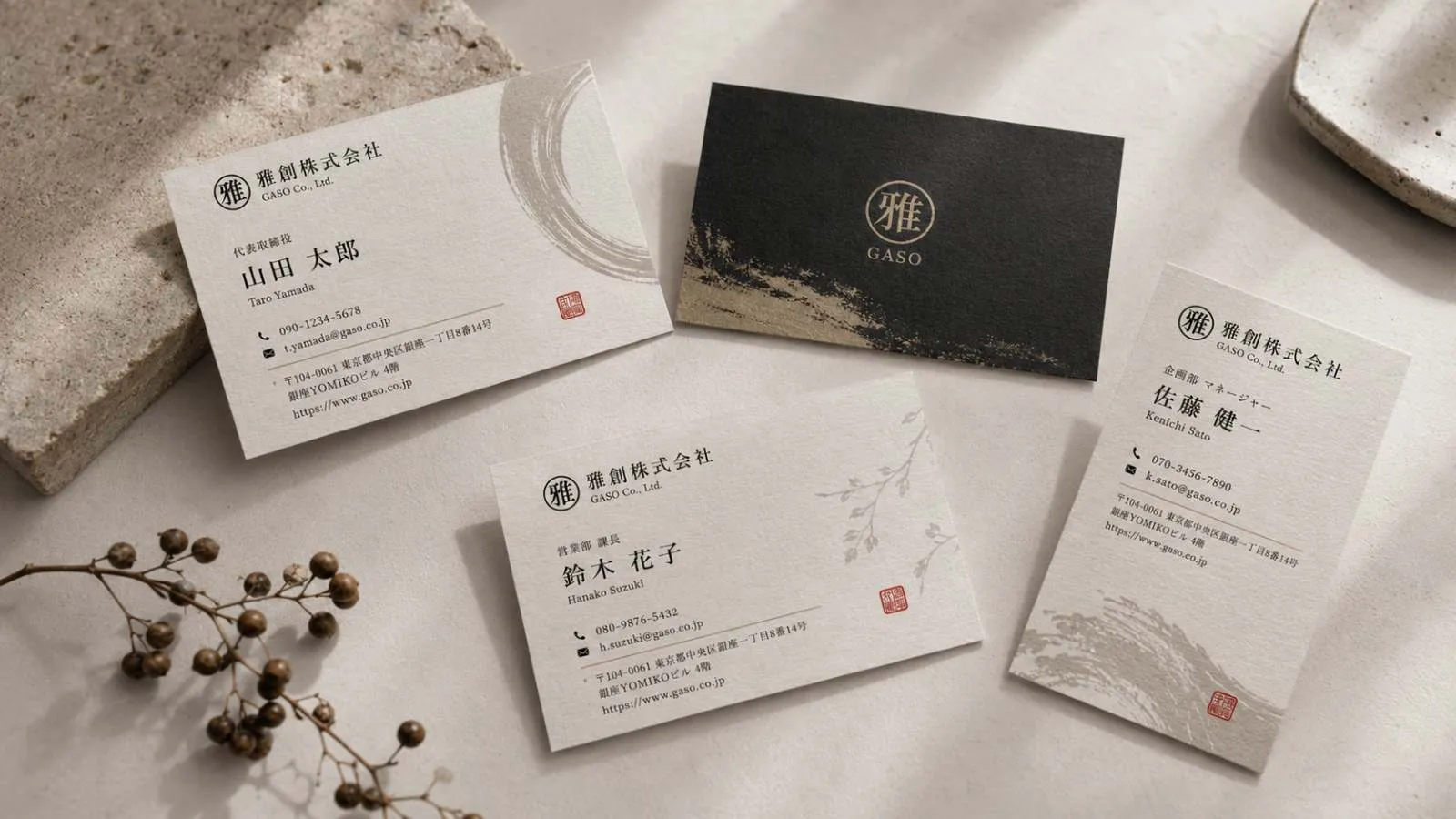
Japanese business cards, or meishi, are printed at 91mm x 55mm — noticeably larger than the US standard of 88.9mm x 50.8mm. The size traces back to a Japanese industrial standard set in 1961, and it's what every Japanese cardholder, card case, and business etiquette expectation is built around. Printing at a foreign standard size is one of the more common — and easily avoided — mistakes new founders make.
Decide Your Bilingual Layout
Most foreign-run businesses use double-sided cards: Japanese on one side, English (or another language) on the other. This lets you present whichever side matches the person you're meeting, rather than asking them to read a language they may not be comfortable with. For more on bilingual design, see our guide to printing business cards in Japan for foreigners.
Nail the Japanese Translation of Your Title
Job titles don't always translate literally, and getting this wrong undercuts your credibility fast. A "CEO" is typically 代表取締役, a "founder" is 創業者 — and there are meaningful differences between similar-sounding titles. Have a native speaker confirm your title translation rather than relying on a direct dictionary swap.
Include Furigana If Your Name Is Hard to Read
If your name doesn't have an obvious katakana reading, adding furigana or a katakana rendering helps Japanese contacts pronounce it correctly the first time — a small detail that goes a long way in a culture where names are read aloud often.
Pick Paper Stock That Signals Quality
Thin, flimsy cards read as low-effort in Japan. A slightly heavier stock with a clean matte or subtle texture finish tends to land better than glossy budget paper, especially in more formal industries. We offer standard, premium, and luxury finishes for exactly this reason.
Order Early, and Order More Than You Think You Need
Business card exchange is frequent in Japan — conferences, introductions, even casual meetings often start with a round of meishi koukan. Running out mid-trip is a common, avoidable embarrassment. Order a healthy stock before you need them, not after. Most founders order 500 to 1,000 cards for their first trip.
A Quick Etiquette Note
Printing the card correctly is half the job — presenting it well is the other half. Offer and receive cards with both hands, take a moment to look at a card you've just received before putting it away, and avoid writing on someone's card in front of them. None of this is printing-related, but it's worth knowing before your first meeting.
The Checklist at a Glance
- Order a representative seal, bank seal, and kakuin as a set
- Register your representative seal with the Legal Affairs Bureau
- Confirm your seal meets the required size (1–3cm square impression)
- Choose a durable material for seals you'll use long-term
- Store your registered seal securely
- Request seal registration certificates ahead of when you'll need them
- Design business cards at the correct 91mm x 55mm size
- Decide on a bilingual, double-sided layout
- Confirm your title's Japanese translation with a native speaker
- Add furigana if your name needs it
- Choose a paper stock that feels professional
- Order more cards than you think you'll need
Common Mistakes to Avoid
- Skipping seal registration because it's technically optional, then struggling with banking later
- Using the same seal for everything instead of separating representative, bank, and kakuin
- Choosing a wood seal without accounting for Japan's humidity
- Printing business cards at a home-country size instead of 91mm x 55mm
- Machine-translating your job title instead of confirming it with a native speaker
- Running out of business cards during a busy networking period
What Else You'll Need as a New Business
Seals and business cards are just the beginning. If you're setting up a physical location, check our guide to restaurant menu printing in Japan for F&B businesses, or our complete guide to retail signage for storefronts. For trade shows and exhibitions, see our Tokyo Big Sight exhibitor guide.
And if you need flyers and leaflets, posters, or roll-up banners for your launch or first event, Print Japan handles everything in English — from design to delivery anywhere in Japan.
Final Thoughts
Seals and business cards look like formalities, but they're two of the first things that signal whether a new business understands how things work in Japan. Getting the registration, sizing, and translation right from day one avoids awkward fixes down the line — and makes a better first impression in the meantime.
Print Japan works with foreign founders on exactly this kind of checklist — bilingual business card design and printing done to the correct specifications, plus guidance on what to have ready for your seal registration. Get in touch before your next big meeting.
Need to print in Japan?
Get an instant quote or message us on WhatsApp. Everything handled in English.