Navigating Japanese business culture for the first time can feel like learning a whole new unspoken language. Among the many traditions that foreign executives, founders, and professionals encounter, two items stand out as absolute cornerstones of daily commerce: Hanko (判子 / 印鑑 — Japanese seals) and Meishi (名刺 — Japanese business cards).
While Western business practices have shifted overwhelmingly toward digital sign-offs and LinkedIn connections, Japanese commercial culture still places deep trust in physical representation. A beautifully crafted business card and a properly registered corporate seal are far more than administrative formalities — they are direct reflections of your professionalism, respect, and legitimacy in Japan.
This comprehensive guide breaks down everything foreign professionals need to know about Hanko and Meishi: what they are, why they matter, how to order them, and the essential etiquette rules to follow.
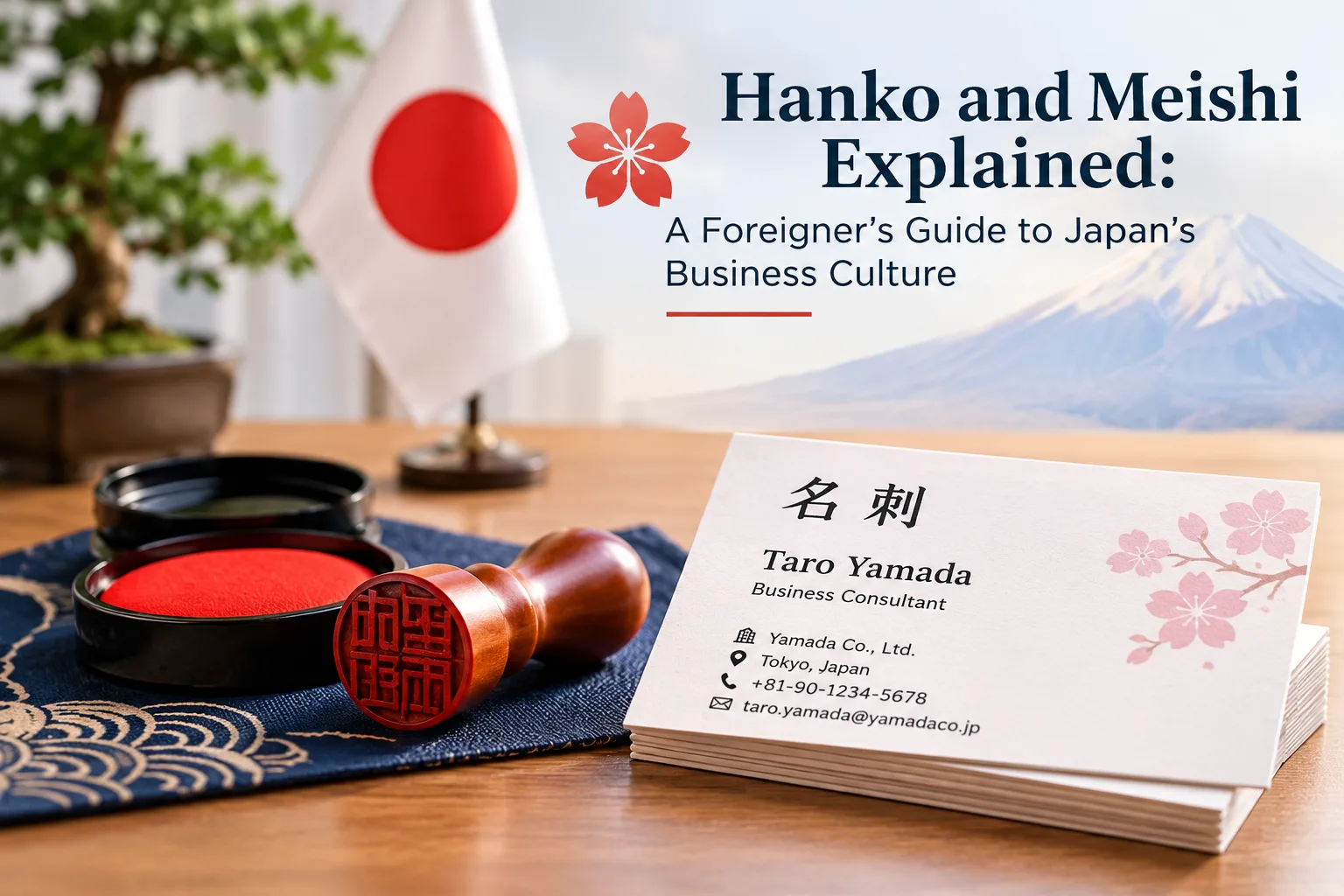
Section 1: All About Hanko (判子 / 印鑑)
What is a Hanko?
A Hanko (also referred to as *Inkan*) is a carved stamp used in place of a handwritten signature in Japan. Made from materials ranging from wood and horn to modern titanium, a Hanko is pressed into red ink (*shuniku*) to leave a distinctive stamped impression (*inkei*) on official documents.
In Japan, contracts, banking applications, lease agreements, and corporate incorporation papers are rarely signed with a pen. Instead, they are validated with a Hanko.
The Three Types of Corporate Hanko You Need
If you are operating a business or establishing a branch in Japan, you will encounter three primary corporate seals:
- Representative Seal (代表印 / 実印 - Jitsuin): This is the official seal registered with the Legal Affairs Bureau (*Homukyoku*). It carries legal weight equivalent to an official corporate power of attorney.
- Bank Seal (銀行印 - Ginko-in): Used exclusively for opening and authorising transactions on corporate bank accounts. Keeping this separate from your Jitsuin prevents unauthorized access to both legal and financial assets.
- Square Seal (角印 - Kakuin): A larger, square-shaped seal used on day-to-day business documents such as invoices, estimates, purchase orders, and receipts.
For a deeper dive into incorporation requirements, read our Foreign Founder's Checklist for Seals and Business Cards.
Key Hanko Etiquette Rules for Foreigners
- Never use washable or self-inking rubber stamps (Shachihata) for formal documents. Legal and banking paperwork requires a traditional carved seal used with real red ink paste.
- Store your Jitsuin securely. Anyone in possession of your registered seal and its certificate can legally bind your company to agreements.
Section 2: All About Meishi (名刺)
Why Meishi is Essential in Japan
In Japanese business meetings, the exchange of business cards — known as Meishi Koukan (名刺交換) — is the very first interaction that takes place. It is not an afterthought or something saved for the end of a meeting; it is a ritual that establishes professional hierarchy, context, and mutual respect.
Your Meishi is considered an extension of your persona. Treating someone's business card with care communicates that you value working with them.
Japanese Business Card Specifications (91mm × 55mm)
One of the most frequent mistakes foreign professionals make is bringing standard Western business cards to Japan.
- Japan Standard Size: 91mm × 55mm (3.58" × 2.16")
- US Standard Size: 88.9mm × 50.8mm (3.5" × 2.0")
- European Standard Size: 85mm × 55mm (3.35" × 2.16")
Because Japanese card holders, business card albums, and digital scanners are tailored precisely for the 91mm × 55mm size, non-standard Western cards do not fit cleanly and can leave an awkward impression. Always ensure your cards are printed to Japanese dimensions. See our Japanese Business Card Printing Service to order cards built to local standards.
Designing a Bilingual Meishi
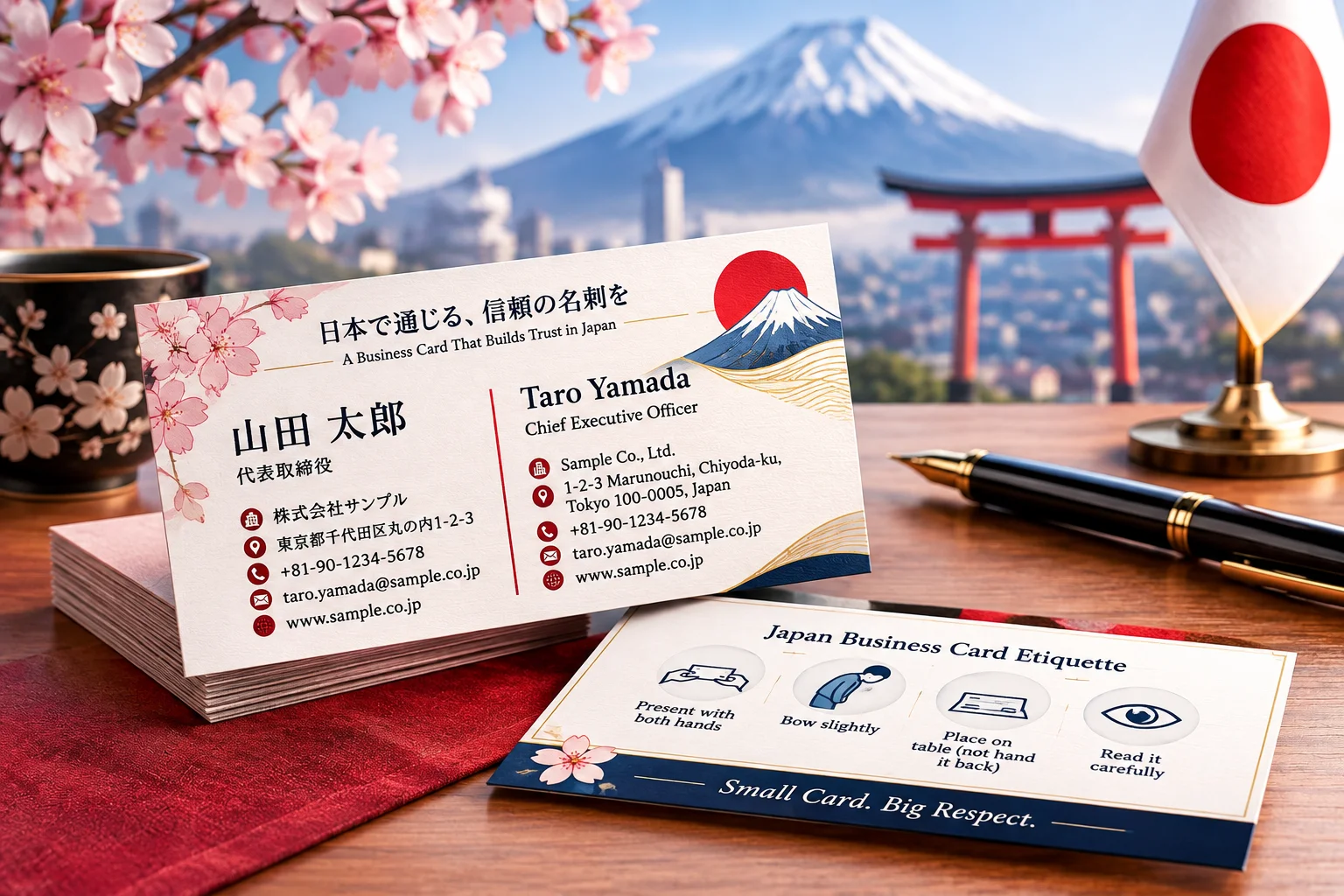
For foreign professionals and international companies, a double-sided bilingual card is best practice:
- Front Side (Japanese): Contains your name in Katakana (or Kanji if applicable), your company name, title translated accurately into Japanese, and Tokyo/Japan office contact details.
- Back Side (English): Contains your English name, global title, international phone numbers, and website URL.
Having your title translated accurately by a native Japanese speaker is crucial. For example, "Managing Director" or "CEO" translates formally as *代表取締役* (*Daihyo Torishimariyaku*). Mis-translating executive titles can cause confusion regarding authority in Japanese corporate structures.
For more details on title translations and layouts, check our guide on how to print business cards in Japan for foreigners.
Section 3: Essential Meishi Exchange Etiquette (名刺交換)
Mastering the mechanics of Meishi exchange takes less than two minutes to learn, but will instantly set you apart as a culturally respectful professional.
- 1Have Your Cards Ready: Store your business cards in a dedicated leather or metal card case (*Meishi-ire*). Never pull cards out of a back trousers pocket or wallet.
- 2Offer and Receive with Both Hands: Hold the card by the top corners with both hands, ensuring your thumbs do not cover the company logo or your name. Present it facing the recipient so they can read it without turning it around.
- 3Bow Slightly and Speak: As you exchange, bow slightly and state your company name, title, and full name (e.g., *"Yoroshiku onegaishimasu"* — pleased to meet you).
- 4Arrange Cards on the Table: During a seated meeting, place the received cards neatly on top of your card case on the desk in front of you. If meeting multiple executives, arrange their cards in the order they are seated.
- 5Never Write on a Received Card: Writing notes on someone's business card during a meeting is considered highly disrespectful. Wait until after the meeting has concluded to annotate contact details.
Section 4: Ordering Hanko and Meishi Before Your Trip to Japan
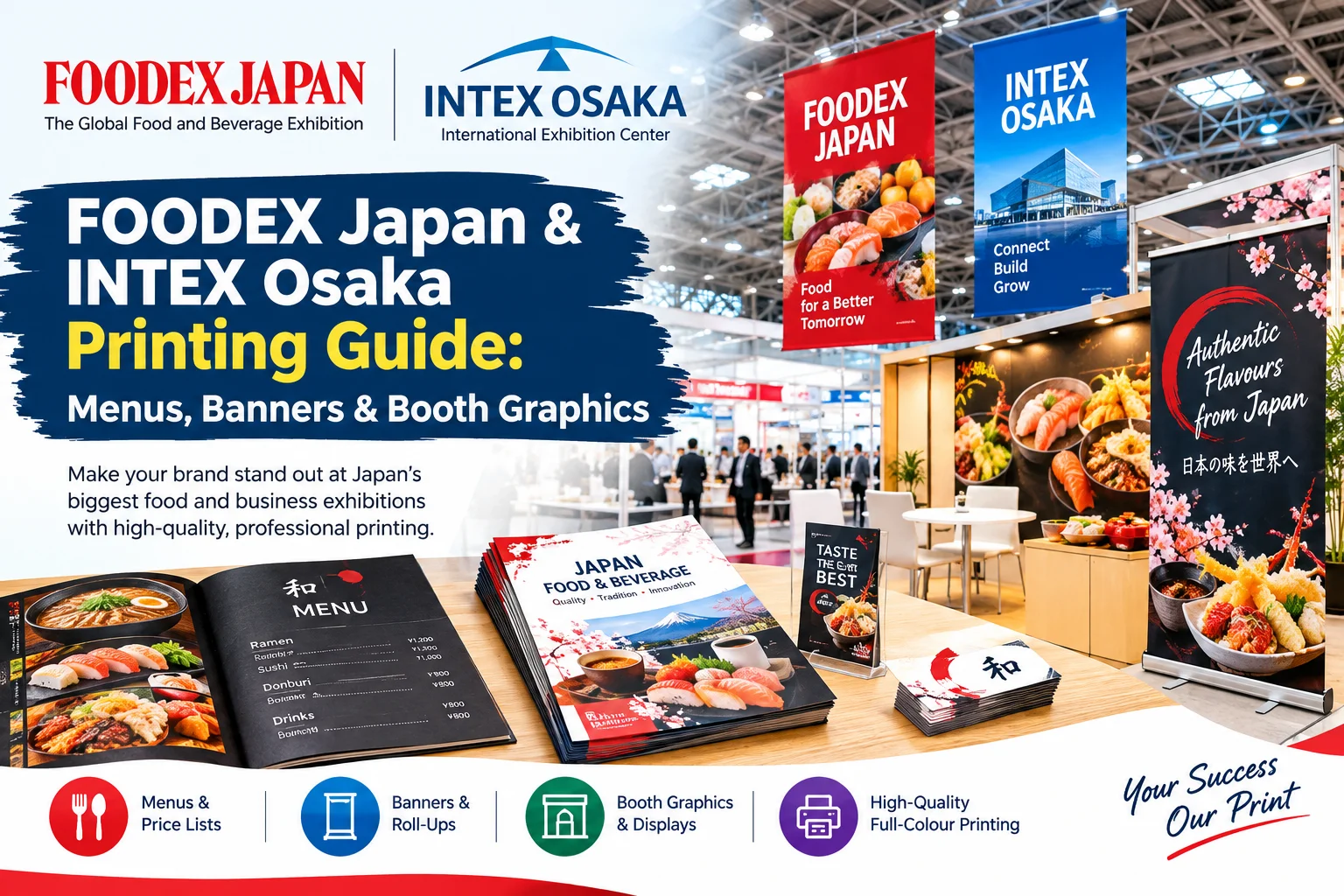
If you are traveling to Japan for an exhibition, client meetings, or trade shows at venues like Tokyo Big Sight or Makuhari Messe, arranging your business cards beforehand is crucial.
Attempting to navigate local Japanese print shops upon arrival often leads to language barriers, formatting errors, and tight turnarounds. With Print Japan, you can order your bilingual business cards, flyers and leaflets, and exhibition materials entirely in English before you board your flight. We deliver directly to your hotel or event booth anywhere in Japan.
Read our guide on how to arrange printing in Japan before you arrive or explore our complete exhibition printing guide.
Frequently asked questions
What is the difference between Hanko and Inkan? While the terms are often used interchangeably in everyday conversation, Hanko refers to the physical stamp tool itself, whereas Inkan strictly refers to the registered stamped impression left on paper.
Can I sign a contract in Japan with a pen instead of a Hanko? Under Japanese corporate law, handwritten signatures on contracts are legally valid for foreign individuals and foreign companies. However, domestic banks, municipal government offices, and traditional Japanese enterprises will almost always require a registered Hanko (Jitsuin) and its accompanying registration certificate (Inkan Shomeisho).
What paper weight is recommended for Japanese business cards? In Japan, thin or flimsy paper suggests a lack of permanence or quality. A stock weight between 220gsm and 300gsm with a smooth matte, silk, or textured finish is standard for corporate meishi.
Should my name on a Japanese business card be written in Katakana? Yes. Adding Katakana phonetics (or Furigana) above or alongside your English name makes it much easier for Japanese colleagues and clients to pronounce your name correctly.
How many business cards should I bring for a 1-week business trip to Japan? Because cards are exchanged at every meeting and introduction, foreign business travelers typically go through cards much faster than at home. Bringing or printing 100 to 200 cards for a 1-week business trip is standard.
---
Ready to get your Hanko-ready paperwork and bilingual business cards sorted before your next trip to Japan? Whether it's 100 cards for a week of meetings or a full exhibition set for your booth, Print Japan handles everything in English — from design to delivery anywhere in Japan. Message us on WhatsApp at +81 80-9062-3586 or email hello@print-japan.com. Tell us about your trip, and we'll take care of the rest.
Related products and guides:
- Business cards — Japan-standard 91×55mm meishi, bilingual layouts
- Leaflets — flyers and brochures for meetings and events
- How to print business cards in Japan — sizes, layouts, and title translations
- The Foreign Founder's Checklist — seals, registration, and business cards
- How to arrange printing in Japan before you arrive
Need to print in Japan?
Get an instant quote or message us on WhatsApp. Everything handled in English.